
Work in Progress Podcast Series
Work in Progress is a 12-part CEO interview series on the This Old House Radio Hour podcast about strengthening America’s skilled trades workforce. Skilled trades careers are critical to America’s growth and competitiveness, yet there are an estimated 20 job openings for every net new worker entering the field. Hear how Business Roundtable CEOs are addressing the challenge by investing in training, partnerships and programs to develop the talent America needs.
The series is presented by Business Roundtable in partnership with the Human Potential Network.


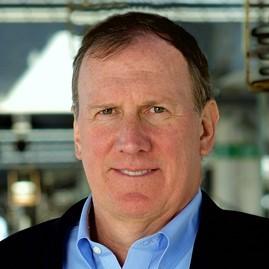
Hi, it’s Kevin O’Connor from This Old House. Today, we’re talking to Hal Yoh, the Chair and CEO of Day & Zimmermann, a Philadelphia company founded in 1901 that his family has run for three generations. It’s one of the largest private firms in America — 40,000 employees who keep power plants, refineries and defense sites running.
That’s work you can’t do without skilled tradespeople, and Yoh says we’re running out of them. His answer is an apprenticeship program that lets a young person earn while they learn, so they can come out with a six-figure career and national credentials, all while skipping the student debt. It’s a different idea of what success looks like after high school, and he thinks the country depends on it. Let’s get into it.
Hal, why is it so important to be talking about skilled trades for your company, and I think more broadly for this country at this moment?
HAL: Well, I think it’s a really good opportunity right now. We are missing a lot of people in the skills. We have a lot of the skilled tradespeople retiring.
We have all this new infrastructure, all this building going on, all the capital projects going on. We’re modernizing our infrastructure. We’re expanding our domestic energy. We’re building data centers. We’re doing all the stuff around AI. We also have all the defense stuff that’s going on. So there’s a huge demand for skilled workers, and we don’t have enough of them to go around.
KEVIN: You talk about a vision to, quote, “Accelerate the next generation.” I’m curious what that means to you, and what does it mean to, I don’t know, say like a 19-year-old who may be thinking about becoming a welder?
HAL: If you’re a 19-year-old right now, the skilled trades is a good place for you to be. We always had that whole stigma that if you didn’t go to college, you’re a failure, and I think that’s totally wrong, especially for a 19-year-old who might not be ready to go to college.
So, how do we draw those people into our skilled trades and be able to accelerate that next generation? They’re going to have the front row seat to see all the new artificial intelligence, to see all the new onshoring going on for energy. A young person can get a great wage here, can gain national credentials that will allow them to go anywhere, and valuable skills to continue to go up into project management, into supervision, and it’s a good skill that creates mobility, so you can go anywhere to be able to go ahead and do this.
KEVIN: Does it put them in front of exciting work, or does it translate into earning potential? What does it mean to have a front seat to those things?
HAL: I think it means all of that. You can go into the trades, come out as a journeyman, you’re making 100-plus thousand dollars a year. You can join the middle class.
Say, “Hey, look at that place. I built that place.” What a cool thing to say to your family. That is what we’re trying to do, is get the excitement in there. You need to know math. You need to be able to read and write. It’s highly technical, highly trained to be able to do that. And four years out, you have some money back into your bank account instead of a huge debt.
And if you want to go to college afterwards, you can do that, but you’re doing it on your nickel, not having to take out all these loans.
KEVIN: You all launched something about a year ago through the Department of Labor, the Registered Apprenticeship Program, available in several states across the country. Can you tell us more about that, what it is, and why an apprenticeship program and why now?
HAL: States are really seeing that this is a good thing for them to do. You have jobs in the community. You have jobs in the state. They’re not moving out of their state. They’re not on unemployment. They’re also spending money in the community. Our registered apprentice programs combine pay and employment. It’s also on-the-job development.
We also have documented competencies so that that person, that apprentice, can go anywhere and say, “Hey, this is what I’ve done.” We’re approved in North Carolina, in South Carolina and in Virginia. Down in South Carolina, we trained over 1,500 welders. You go into shipyards, you go anywhere, people are short of welders.
We have nine crafts that we work with, and it really helps the apprentice clear the path to go into the trades, and they have some consistency around the way they’re trained. And the goal is really for us to have an employee-led ecosystem that really can scale.
KEVIN: What happens if you train some of those young people, and then they do move on and they go somewhere else, and then they’re working at a shipyard that’s not under your umbrella? How do you feel about that move and your investment?
HAL: We want people to stay with us. We need to give people good jobs, pay them a good wage. We also need to take care of them. We need to have a culture where they want to continue to work with us. If they leave, and if they end up going to that shipyard, that shipyard would’ve hired somebody else anyway, so let’s get that other person there and work its way through.
It helps the whole labor ecosystem because the issue is if you’re short of people, then it really doesn’t help. You look at scarcity. When scarcity happens, the whole ecosystem’s blown up, and we don’t really need to have that happen.
KEVIN: I was particularly interested in the nuclear. I don’t think anybody understands what a nuclear outage is. Can you walk us through what happens when a nuclear plant shuts down for things like refueling? Who shows up? How many of them? What do they do?
HAL: Typically, these plants go down every 18 months to two years to do the refueling. They’re also doing all the maintenance work on it. The outage is staffed 24/7, performed under extremely rigorous safety, security, quality and regulatory requirements.
It could mean hundreds, and at some site, more than 1,000 additional workers. So, it’s a whole army that comes in here. You’ve got to get the right workers in there, but if we don’t have that healthy balance between new people coming into it as apprentices, then when the senior people retire, we’re not going to have anybody around.
So, it’s really important to get that pipeline of people in here so that we can have decade over decade, safe, reliable, quality workers there.
KEVIN: How are you pulling that off? How are you finding the resources and getting yourself in a position that you’re ready to do that and to do it successfully?
HAL: For over a decade, we’ve been the largest power plant maintenance contractor here in the U.S. We work with the unions. They’re the ones that have excellent programs around training.
For the open shop places, we have a huge rolodex. It has detail on every single person so that we understand what their skill set is. You also have to have a security clearance check. It really is this big elaborate dance to get everybody in there, get them qualified to get in there.
We have apps on our phone to help everybody with their paperwork. We have apps on the phone that says, “Hey, Kevin, there’s an outage at plant XYZ coming up in four months. You want to join us?” We’re pinging them on the phone. We’re using technology. That’s how we go ahead and get it, and there again, we have a great partnership that I thoroughly love with the building trades.
KEVIN: So, nuclear’s one of the lines. You have many of them, but one of them is also defense contracting. You lean into veterans. I presume that provides an advantage for you. I’ve heard you talk about supporting veterans has to go, quote, “beyond thank you.” What does that mean, and what is it that veterans have that make them sort of uniquely qualified and attractive for your organization?
HAL: We love having veterans work for us, and yes, we have a defense area, but we have veterans throughout the whole ecosystem that we have here at Day & Zimmermann. So, we really love the helmets to hard hats that the unions are doing. We support that. How we support the veterans begins with recognizing what skills they have and what they already bring to the table.
When they come out of the military, they bring that expertise, and we put them to work and identify the areas that we can help them improve their skills. They bring some great habits. I mean discipline, teamwork, comfort with procedures, respect for safety, accountability, ability to perform under pressure.
Those are qualities that you need at a nuclear site. Those aren’t qualities that you get in graduating from high school.
KEVIN: This is your chance to make the pitch to the parents of a young person, and they are staring at two choices, maybe in an apprenticeship and a job working in the trades and then the college route where it’s four years, which can be fantastic. What do you say to the parents who are watching their young child wrestle with that decision?
HAL: You want the kid to be happy. You want your child to enjoy what they’re doing. You don’t want it to be a job. You want it to be a career. So, ask your child, “Hey, what do you want to do? What kind of work gives my child energy? What opportunities will create a financial stability and a sense of purpose?”
If you love working with your hands, this is a great place to work with your hands. If you love being able to figure things out, this is a great way of being able to do that.
In the Northeast, all this onshoring of pharmaceuticals, all this onshoring of semiconductors, all this new power that we need to bring in, you could have a front row seat to do that, and you’re not saying no to university yet. This is not an and/or.
And by the way, there are degreed people that are in the trades right now enjoying themselves. So, it’s not that if you go to university, you can’t be working in the trades, and if you work in the trades, you don’t have to go to university. You can continue in the trades if you want to, and you can rise up through the ranks like our folks have done, or you can also go back and get your degree.
And by the way, a lot of them end up getting technical degrees, engineers that we’re shortage of, those type of folks right now. This is a great way to learn a skill, be proud of what you’re building, and if you decide to go back to school later on, then you decide to. If you don’t, you have a great career in front of you. So, it’s all about pride.
KEVIN: Hal, I appreciate your time with us, and I appreciate your organization’s participation in this new initiative about training the new generation of skilled trade workers. Thank you.
HAL: Thank you very much for having us here.
KEVIN: This has been Work in Progress, presented by the Business Roundtable in partnership with the Human Potential Network, conversations about apprenticeship and workforce training in America’s skilled trades. Back to you, Jen.
Chair and CEO, Day & Zimmermann

Chairman of the Board and Chief Executive Officer, AT&T Inc.

President and CEO, HII

President & COO, Business Roundtable
